

Introduction
In industrial environments, safety communication must be immediate, clear, and universally understood. One of the most effective tools used to achieve this clarity is Floor Marking Tape.
From warehouses and factories to hospitals and logistics hubs, floor markings help control movement, identify hazards, and organise operational zones.
However, the effectiveness of these markings depends not only on tape quality but also on correct colour coding and placement.
This is where a structured Floor Marking Tape Code Chart becomes essential.
It acts as a visual reference that helps safety managers, supervisors, and compliance teams apply consistent colour standards across facilities.
When used correctly, such a chart reduces confusion, improves compliance, and enhances overall workplace safety.
Understanding the Purpose of a Floor Marking Tape Code Chart
A floor marking tape code chart defines what each colour represents within a workspace. Instead of relying on written instructions alone, it uses visual cues that are easy to recognise, even in fast-paced or noisy environments.
A well-implemented Floor Marking Tape Code Chart ensures that employees, visitors, and contractors can quickly understand pathways, restricted zones, emergency routes, and work areas without needing verbal explanations.
The chart also supports standardisation across departments and locations, which is especially important for large manufacturing units or multi-site operations.
10 Common Colour Codes and Their Meanings
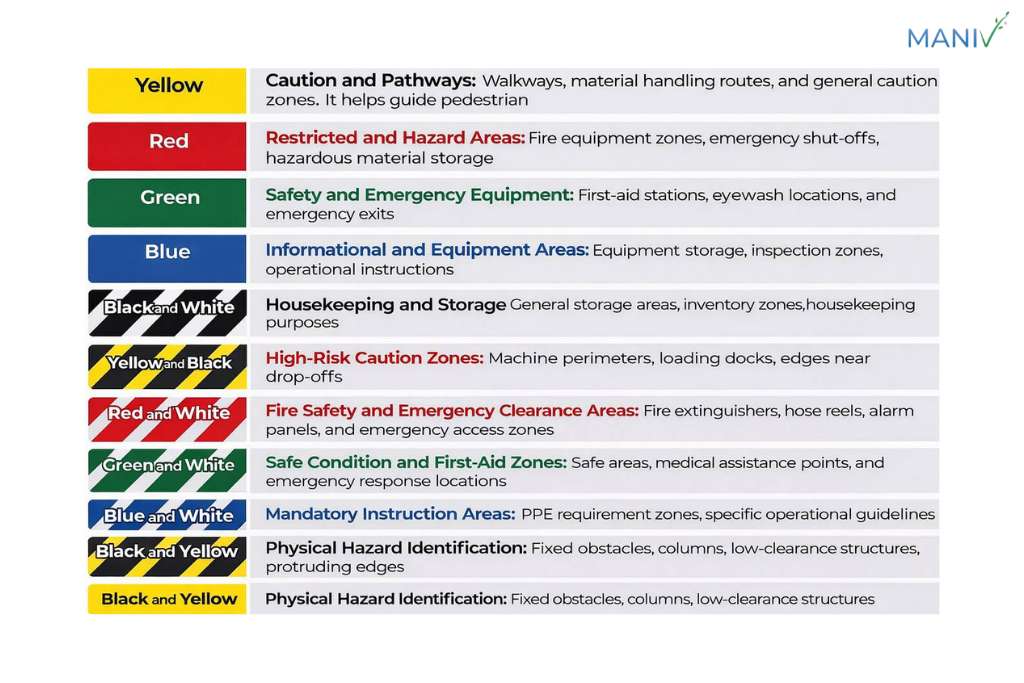
Yellow:- Caution and Pathways
Yellow is commonly used to indicate walkways, material handling routes, and general caution zones. It helps guide pedestrian movement and separate people from moving equipment. Clear yellow markings reduce the risk of accidental collisions and improve traffic flow.
Red:- Restricted and Hazard Areas
Red is typically reserved for areas that require immediate attention or restricted access. This includes fire equipment zones, emergency shut-offs, and hazardous material storage areas. Red markings communicate danger and help ensure these areas remain unobstructed.
Green:- Safety and Emergency Equipment
Green is associated with safety-related zones such as first-aid stations, eyewash locations, and emergency exits. These markings guide personnel quickly during emergencies and support faster response times.
Blue :- Informational and Equipment Areas
Blue markings are often used to identify equipment storage areas, inspection zones, or operational instructions. They help differentiate between movement paths and functional zones without creating visual clutter.
Black and White:- Housekeeping and Storage
Black-and-white combinations are commonly used for general storage areas, inventory zones, or housekeeping purposes. These markings help maintain order and improve space utilisation.
Yellow and Black:- High-Risk Caution Zones
Used to highlight areas with elevated risk such as machine perimeters, loading docks, and edges near drop-offs.
Red and White:- Fire Safety and Emergency Clearance Areas
Commonly applied around fire extinguishers, hose reels, alarm panels, and emergency access zones to ensure they remain unobstructed.
Green and White:- Safe Condition and First-Aid Zones
Indicates safe areas, medical assistance points, and emergency response locations.
Blue and White:- Mandatory Instruction Areas
Used where specific instructions or operational guidelines must be followed, such as PPE requirement zones.
Black and Yellow:- Physical Hazard Identification
Highlights fixed obstacles, columns, low-clearance structures, and protruding edges within industrial environments.
Why Visual Standardisation Matters for Safety Managers?
Consistency is critical when implementing floor markings. Without standard colour coding, different departments may interpret markings differently, leading to confusion and safety risks. A clearly defined system helps safety managers train staff more effectively and maintain compliance during audits.
Choosing the Best Floor Marking Tape also plays a role in long-term effectiveness. High-visibility colours, strong adhesion, and resistance to wear ensure that markings remain clear even in high-traffic areas. Durable tape reduces maintenance efforts and supports consistent visual communication.
Factors to Consider When Applying Floor Marking Codes
Before applying any floor marking system, it is important to evaluate surface conditions, traffic levels, and environmental factors. Smooth epoxy floors may require different adhesive strength compared to rough concrete. High-traffic zones need more durable tape options to prevent peeling or fading.
Cost planning is another practical aspect. While initial Floor Marking Tape Price may vary depending on material and durability, selecting the right tape reduces replacement frequency and long-term expenses. Safety managers should focus on performance over short-term cost savings.
Why Choose Maniv Tapes?

Maniv Tapes understands the operational challenges faced by safety and facility managers. Our floor marking solutions are designed to support standardised colour coding, clear visibility, and long-lasting performance in industrial environments.
Backed by Maniv industrial tapes, Maniv adhesive tapes, Maniv safety tapes, and Maniv marking tapes, each product is developed with attention to adhesion consistency, abrasion resistance, and ease of application.
Maniv Tapes works closely with customers to ensure the right tape is selected for the right application. Whether marking walkways, hazard zones, or storage areas, our solutions help maintain clarity and compliance.
Organisations planning to Buy Floor Marking Tape benefit from consistent quality and application-focused design that supports safety initiatives effectively.
Conclusion
A well-planned floor marking system is more than a visual aid; it is a core component of workplace safety and organisation. By following a clear code chart and using durable materials, safety managers can reduce risks, improve movement efficiency, and support regulatory compliance.
Implementing standard colour codes using reliable tapes ensures that safety messages remain visible and understood across all levels of the organisation.
With the right approach and the right materials, floor markings become a long-term asset that supports safer, more organised work environments.